We analysed over 45,000 planning applications from the last 12 months. The patterns reveal stark differences between Dublin and rural Ireland — and some results that might surprise you.
Dublin Leads in Volume — But Not How You'd Think
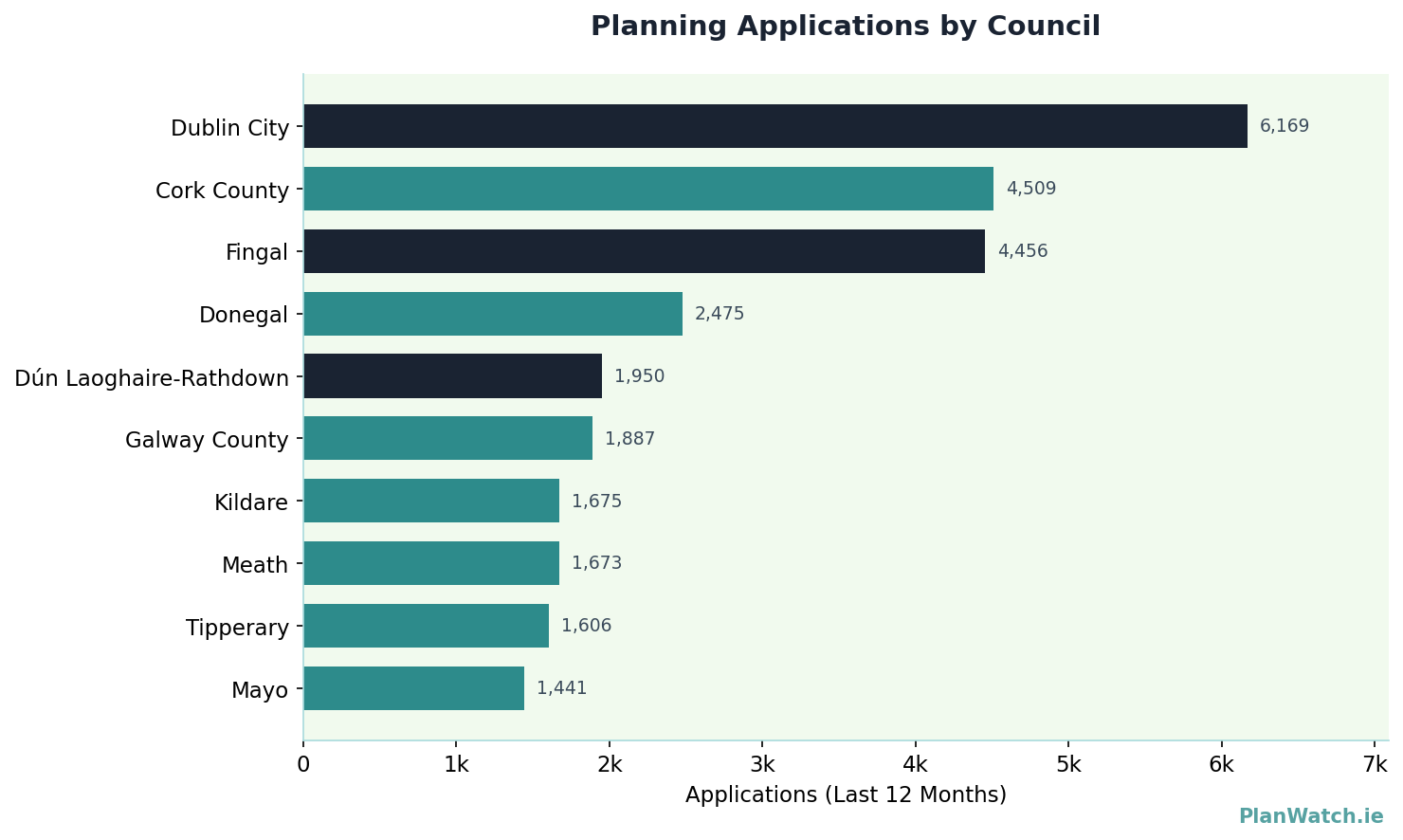
Looking at the last 12 months of data, Dublin City Council processes the most applications at 6,169 — more than any other council in Ireland.
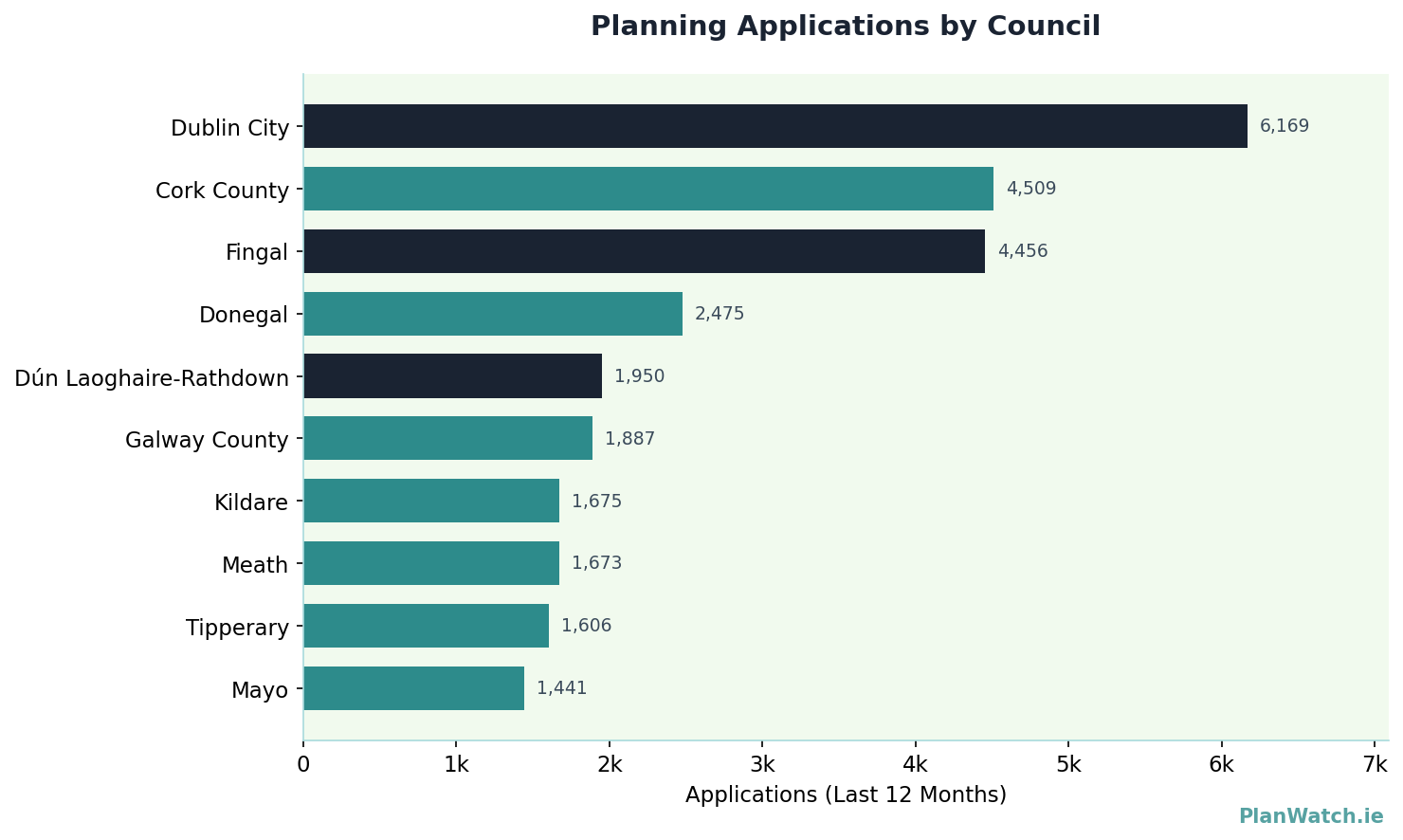
Cork County comes second with 4,509, followed closely by Fingal at 4,456. The Dublin region (Dublin City, Fingal, Dún Laoghaire-Rathdown, and South Dublin combined) accounts for roughly a third of all planning activity.
The Approval Gap Is Stark
Here's the data point that matters most for anyone submitting an application:
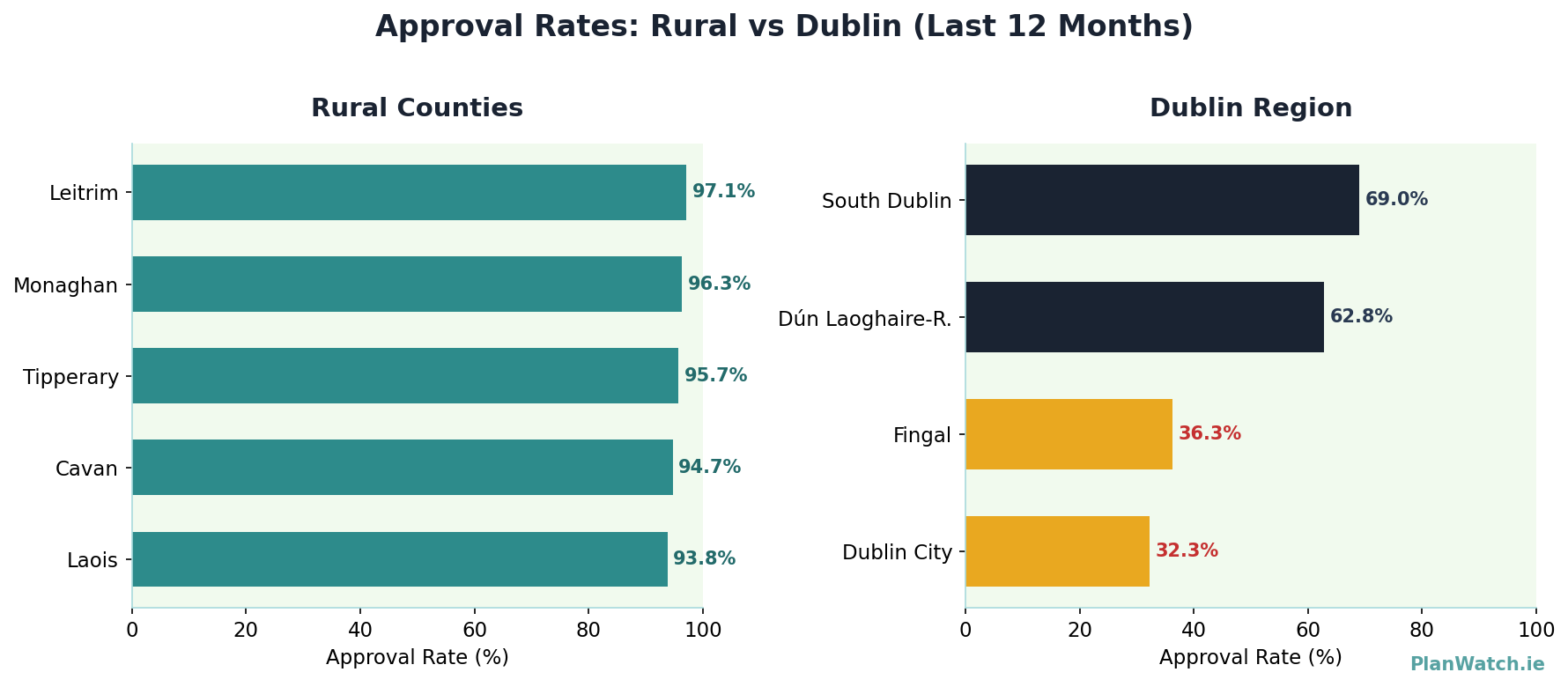
Rural counties approve 94-97% of applications. Leitrim leads at 97.1%, with Monaghan, Tipperary, Cavan, and Laois all above 93%.
Dublin tells a different story:
- South Dublin: 69%
- Dún Laoghaire-Rathdown: 62.8%
- Fingal: 36.3%
- Dublin City: 32.3%
That's not a typo. In Dublin City, only 1 in 3 applications gets approved in the last 12 months. Fingal isn't far behind.
Why? Higher scrutiny, denser development patterns, more third-party objections, and stricter enforcement of development plans. If you're planning a Dublin application, budget extra time for potential refusals and appeals.
What's Actually Being Built
The breakdown of development types shows where the market is focused:
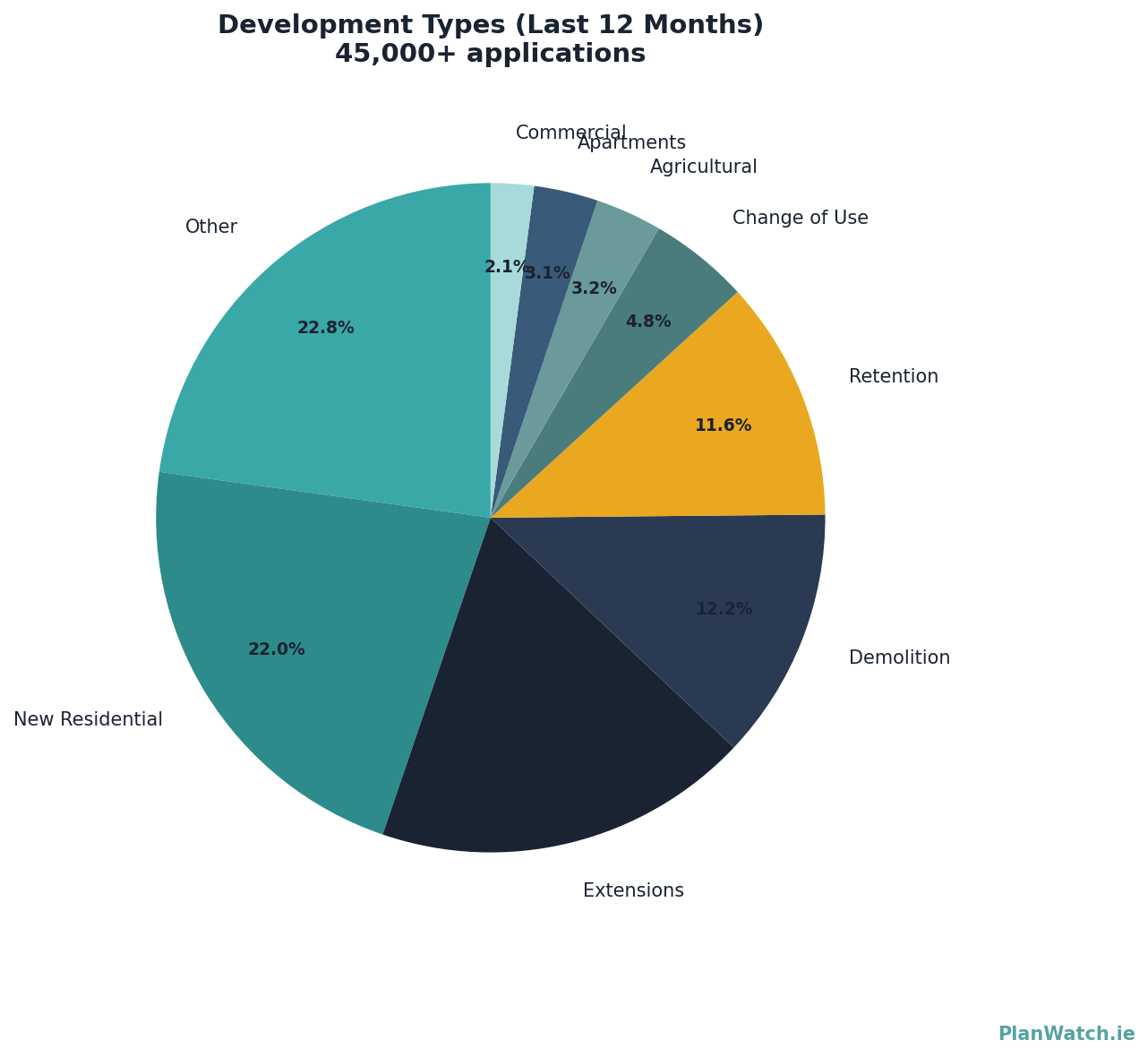
- Other/Miscellaneous (22%): Ancillary buildings, site works, and mixed categories
- New Residential (21%): Houses and housing developments
- Extensions (18%): People expanding existing homes
- Demolition (12%): Site clearance for redevelopment
- Retention (11%): Regularising works done without permission
The retention figure is notable — over 5,000 applications in 12 months are for works already completed. That's a lot of "forgiveness rather than permission" in Irish planning.
Seasonal Rhythms Are Real
Monthly submissions follow predictable patterns:
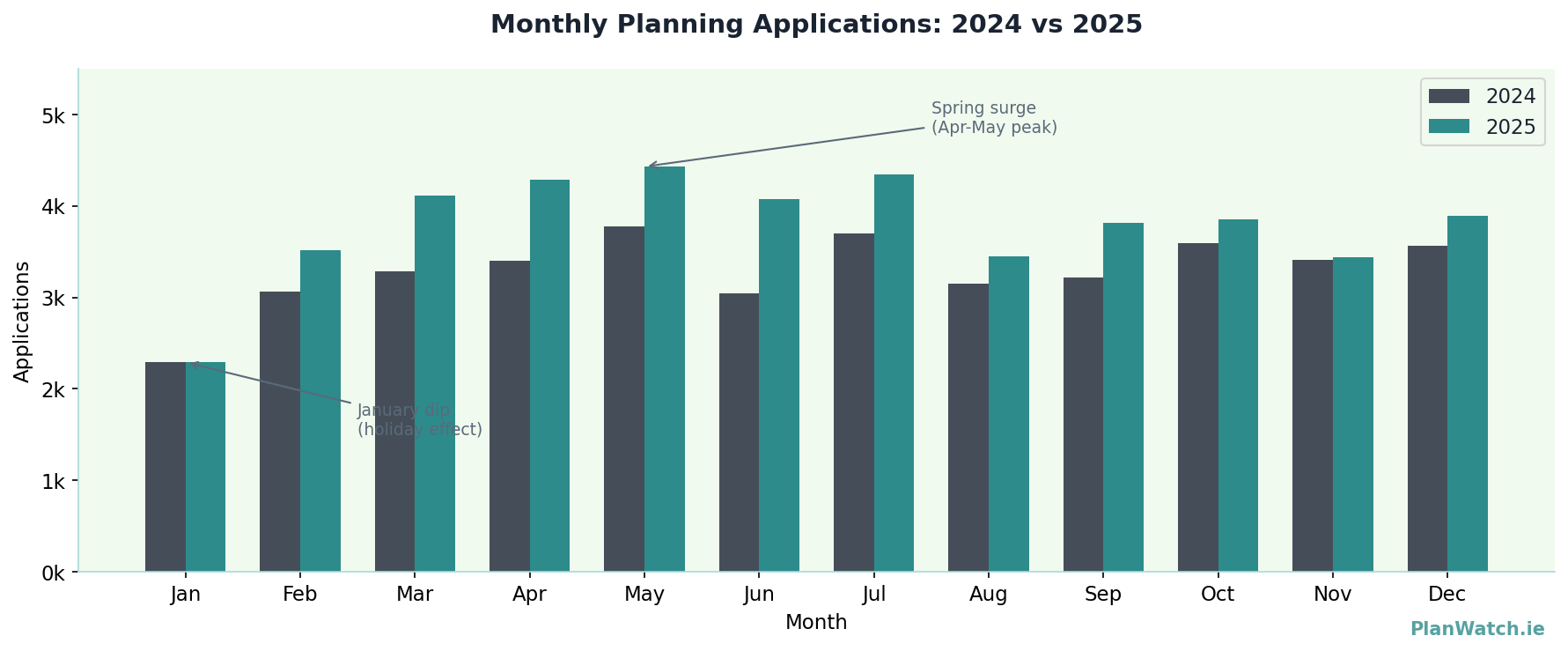
- January dip: Applications drop 30-40% post-Christmas
- Spring surge: April-May sees peak activity as the building season starts
- 2025 running ahead: Year-on-year growth of 15-20% compared to 2024
If you want faster processing, consider submitting in quieter months when planners aren't swamped.
Dublin Councils Are Fastest
Here's a counterintuitive finding — despite low approval rates, Dublin councils process applications quickly:
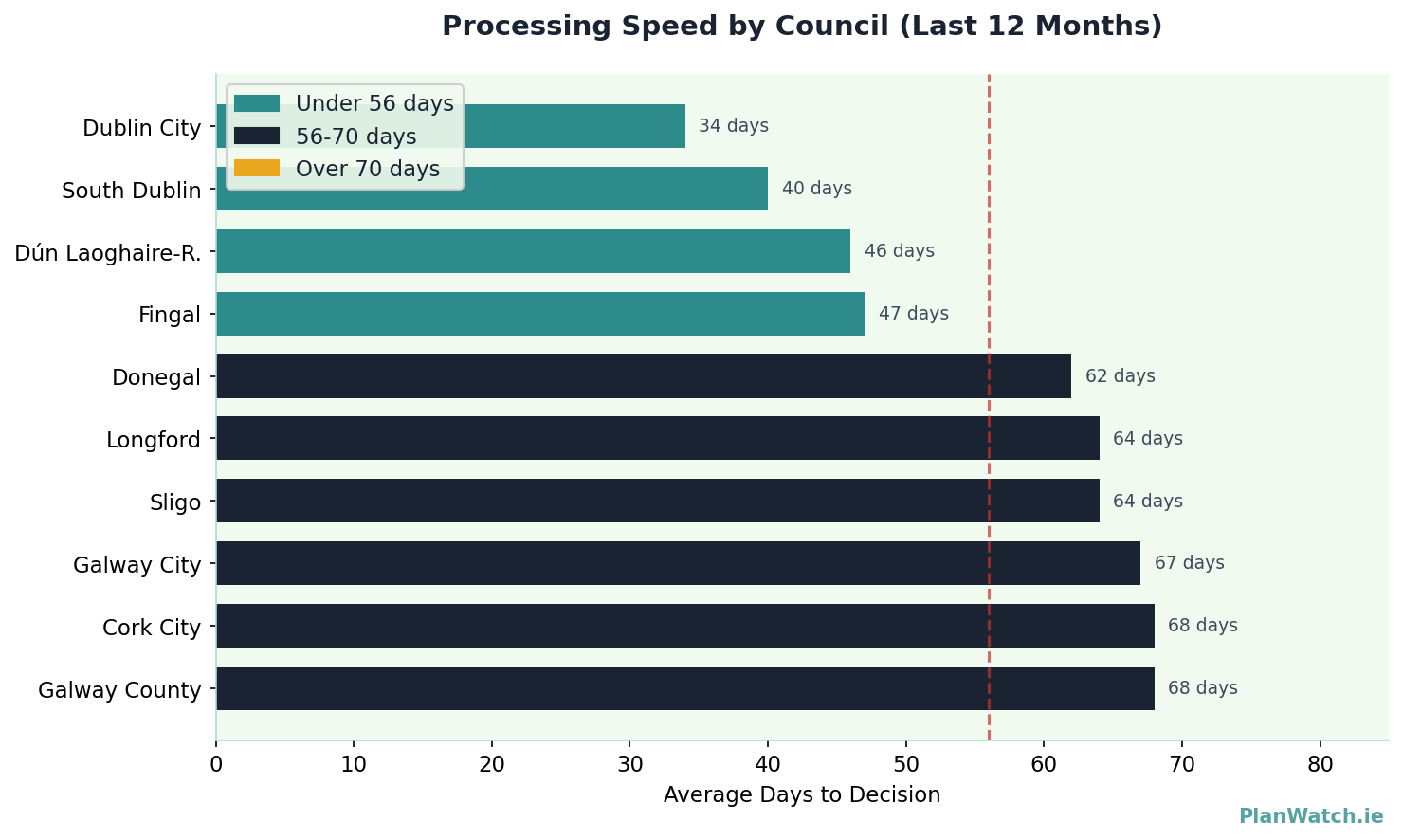
Dublin City: 34 days average — fastest in the country. South Dublin (40 days) and the other Dublin councils all beat the statutory 8-week deadline.
Regional councils take longer: Galway City (67 days), Cork City (68 days), and Galway County (68 days) are all above the statutory period.
Speed doesn't equal approval, though. Dublin is fast to decide — but more likely to refuse.
What's Growing (and Shrinking)
Comparing 2024 to 2025 by category:
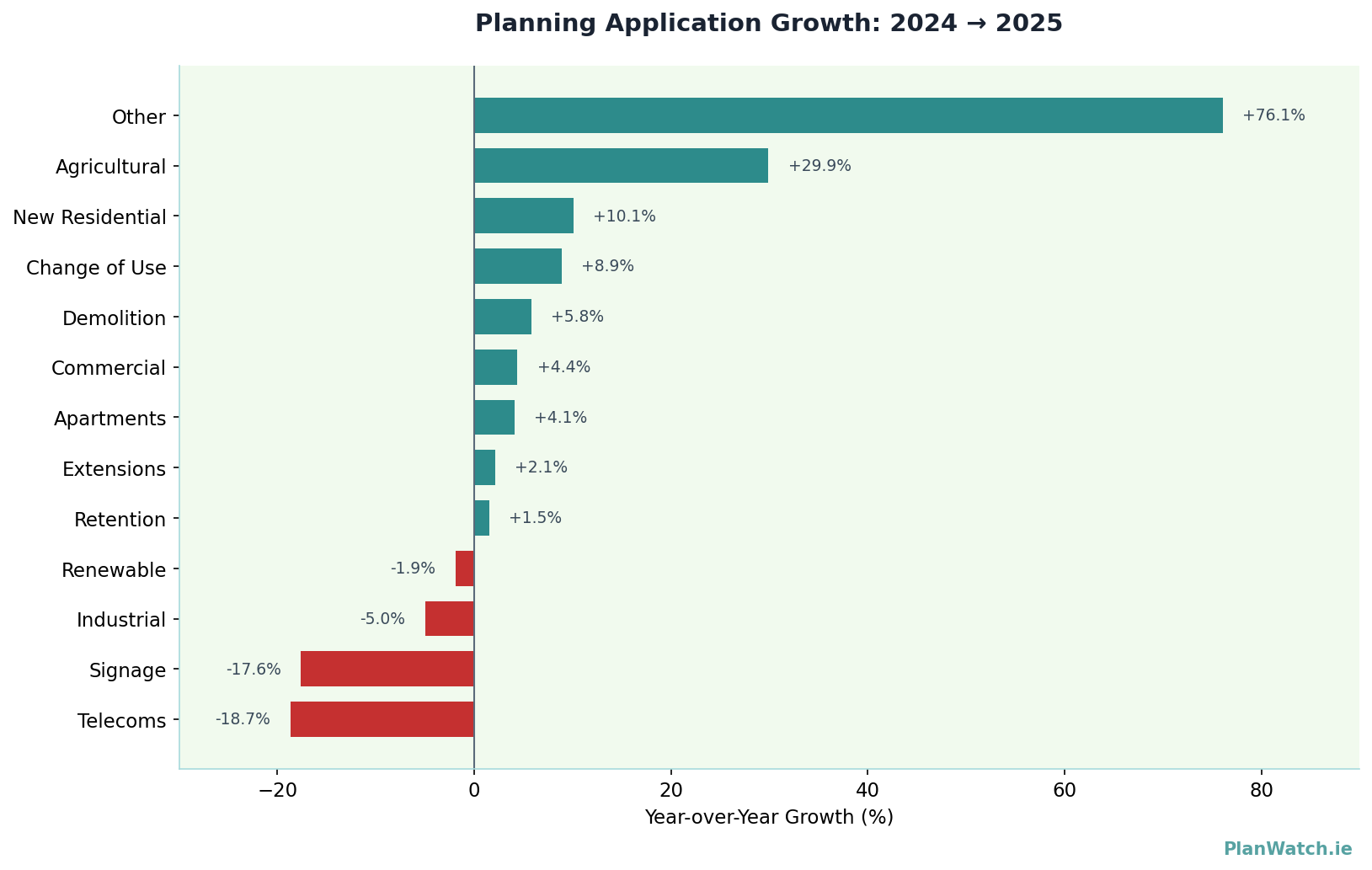
Growing fast:
- Agricultural (+30%): Farm buildings and rural diversification
- New Residential (+10%): Continued housing demand
Declining:
- Telecoms (-19%): 5G infrastructure rollout stabilising
- Signage (-18%): Economic caution?
Key Takeaways
- Location determines outcome: Your approval odds swing 60+ percentage points between rural and Dublin
- Dublin is tough: Expect a third of Dublin City/Fingal applications to be refused
- Speed ≠ approval: Dublin councils are fast but selective
- Market is growing: 2025 applications up 15-20% year-on-year
- Timing matters: January is quiet; April-May is the rush
Data source: 45,052 planning applications from the last 12 months, scraped daily from all 31 Irish local authorities.
Want to track planning activity in real time? Search our database or set up alerts for areas you're watching.